Proper site preparation is the single most important step in ensuring a smooth shipping container delivery. A well-prepared site prevents delivery delays, avoids re-delivery fees, and protects your container investment for decades. This guide walks you through every step — from ground preparation and access clearance to permits and foundation options.
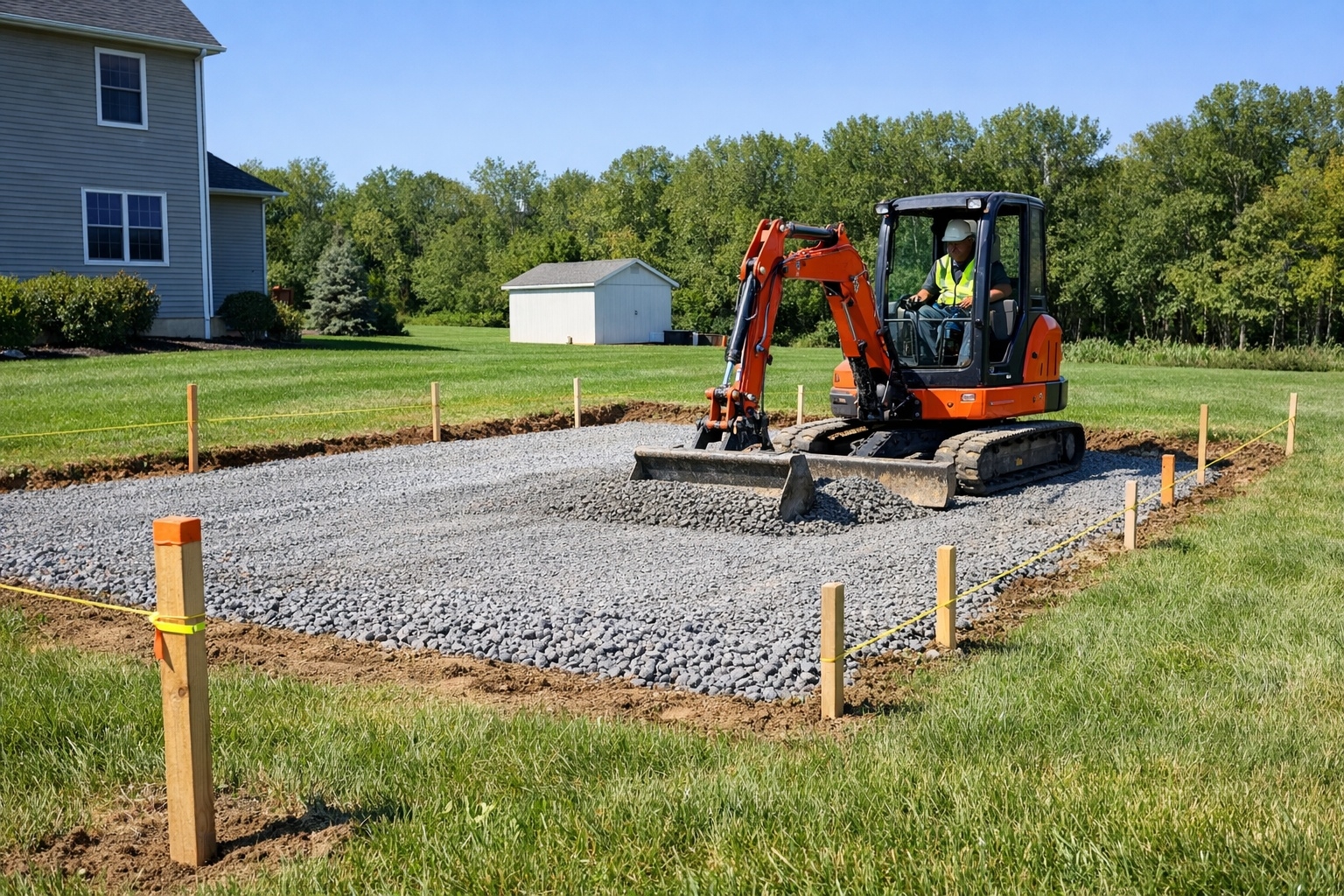
Step 1: Ground Preparation
Shipping containers weigh between 4,900 lbs (20ft) and 11,800 lbs (40ft specialty) empty. The ground beneath must support this weight without sinking, shifting, or collecting water.
Acceptable Surfaces
- Concrete pad — The gold standard. Provides maximum stability and prevents moisture
- Compacted gravel (4-6 inches) — Most popular residential option. Affordable, drains well, and levels easily
- Asphalt — Excellent for commercial sites. Existing parking areas work perfectly
- Railroad ties or concrete blocks — Elevates the container for airflow and prevents ground contact rust
Surfaces to Avoid
- Bare soil or grass — Will settle unevenly, causing door alignment issues
- Sand or loose fill — Shifts under weight, especially after rain
- Slopes greater than 2% — Container must sit level for doors to function properly
Step 2: Access Clearance
The delivery truck is the largest vehicle that will visit your property. Plan access for these dimensions:
| Requirement | 20ft Container | 40ft Container |
|---|---|---|
| Truck Length | ~45 feet | ~65 feet |
| Road Width | Min. 12 feet | Min. 12 feet |
| Overhead Clearance | Min. 14 feet | Min. 14 feet |
| Turning Radius | 30 feet | 45 feet |
| Placement Space | Container + 20ft | Container + 20ft |
Overhead Obstructions to Check
- Power lines and utility cables
- Tree branches overhanging the access route
- Low bridges or carport structures
- Satellite dishes or antennas near the placement area
Step 3: Permits and Regulations
Permit requirements vary significantly by location. Check with your local building department or planning office before delivery:
- Residential zones: Many require a building permit or special-use permit for containers
- HOA communities: Most HOAs have restrictions — verify before ordering
- Commercial zones: Generally more permissive, but may require site plans
- Setback requirements: Containers typically must be set back 5-15 feet from property lines
- Time limits: Some jurisdictions allow temporary placement (90-180 days) without a permit
Pro tip: Contact your local zoning office and ask: "Do I need a permit to place a shipping container on my property for storage?" This one call can prevent thousands in fines.
Step 4: Foundation Options
While containers can sit directly on compacted gravel, a foundation improves longevity, drainage, and accessibility:
Concrete Blocks (Budget-Friendly)
Place 6-8 concrete blocks at corner castings and mid-points. Cost: $50-$150. Elevates container 6" for airflow.
Gravel Pad (Most Popular)
4-6 inches of compacted crushed gravel over landscape fabric. Cost: $300-$800 for a 20ft pad. Excellent drainage.
Concrete Slab (Premium)
4" reinforced concrete slab with vapor barrier. Cost: $1,500-$4,000. Best for permanent placement and modification projects.
Pier Foundation (Elevated)
Concrete piers at each corner casting. Cost: $800-$2,000. Required for flood zones and sloped terrain.
Step 5: Delivery Day Checklist
- Confirm placement location is marked (spray paint, stakes, or cones)
- Clear the access route of vehicles, debris, and overhanging branches
- Ensure gates are open and unlocked
- Someone 18+ is present to sign the delivery receipt
- Have a camera ready to photograph the container upon arrival
- Review our full shipping and delivery policy
Need help planning your site? Our team has coordinated over 5,000 deliveries and can walk you through every detail. Request a free site consultation or email sales@maritimecontainersllc.com.