When shopping for a shipping container, the two most common condition grades you'll encounter are one-trip and brand new (also called factory-direct or zero-voyage). Both arrive in excellent condition, but they differ in history, cosmetics, pricing, and ideal use cases. This guide breaks down every factor so you can make a confident purchase decision.
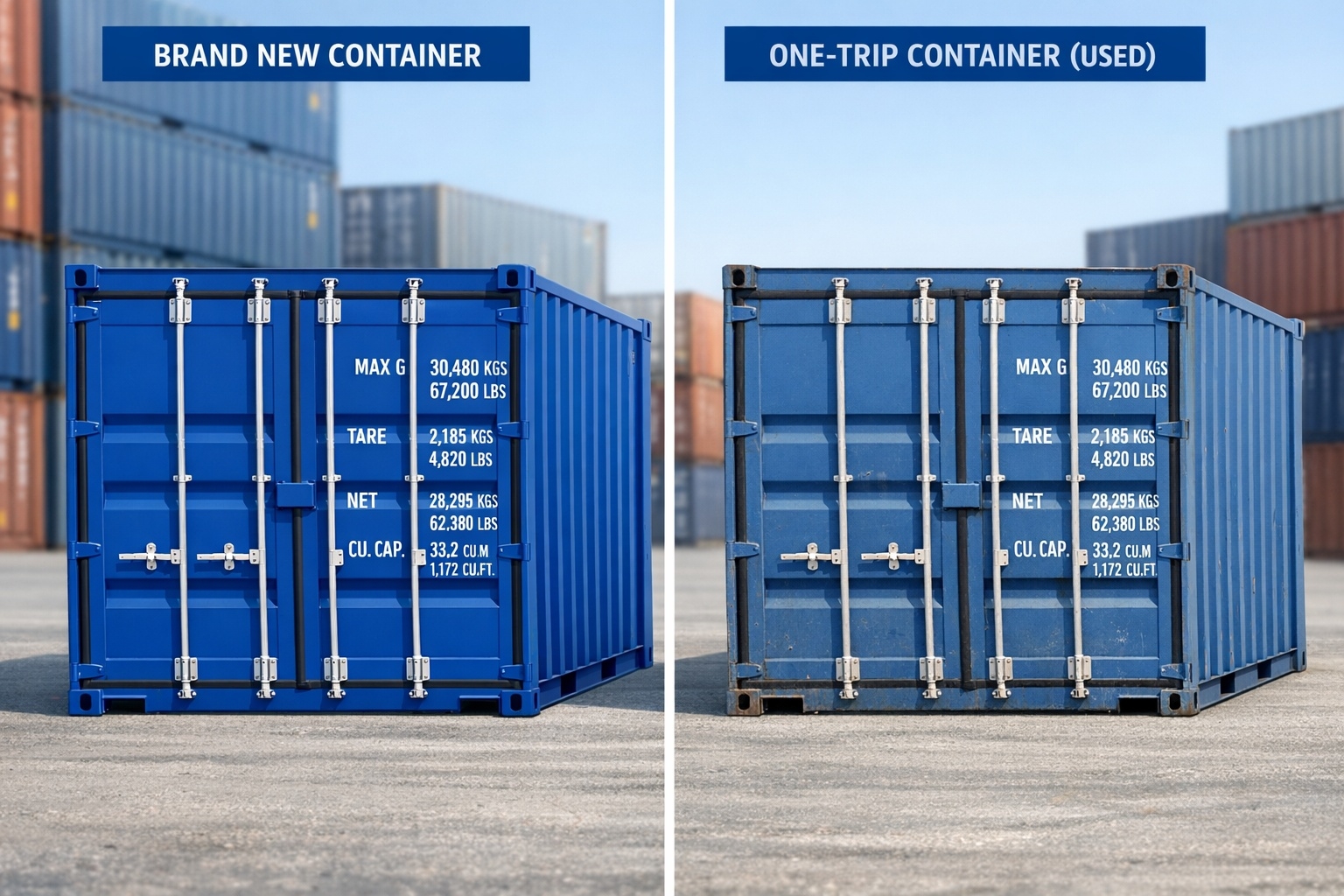
What Is a One-Trip Shipping Container?
A one-trip container is manufactured overseas (typically in China), loaded with export cargo, and shipped to the United States on a single ocean voyage. Upon arrival at a U.S. port, the cargo is unloaded and the container is sold to domestic buyers.
Because it has only made one journey, the container arrives in near-new condition: factory paint is 95-99% intact, rubber door gaskets are supple, the marine-grade plywood floor shows minimal wear, and there is little to no surface rust. One-trip units are the most popular grade among residential buyers, farms, and small businesses seeking reliable storage at a competitive price.
What Is a Brand New (Zero-Voyage) Container?
A brand new container is manufactured to order and has never carried cargo or been loaded onto a ship. It is transported empty — usually by vessel or rail — directly to the buyer's market. Zero-voyage containers offer factory-perfect cosmetics: flawless paint, pristine gaskets, zero dents or scratches, and a clean-room-level interior.
Brand new containers are the top choice for container homes, retail pop-ups, restaurants, and high-visibility modification projects where appearance matters as much as function.
Key Differences at a Glance
| Factor | One-Trip | Brand New |
|---|---|---|
| Ocean Voyages | 1 | 0 |
| Exterior Paint | 95-99% factory finish | 100% factory-perfect |
| Interior Condition | Near-new, minimal scuffs | Pristine, zero wear |
| Rubber Gaskets | Excellent, fully functional | Brand new, never compressed |
| Price (20ft) | From $2,899 | From $3,499 |
| Price (40ft) | From $4,599 | From $5,999 |
| Best For | Storage, job sites, farms | Modifications, retail, homes |
| Lifespan | 25+ years | 25+ years |
| Certification | CSC certified | CSC + ISO certified |
When to Buy a One-Trip Container
Choose a one-trip container when:
- Budget is a priority — Save $600-$1,400 compared to brand new
- Storage is the primary use — Farm equipment, inventory, tools, vehicles
- Job site deployment — Construction, mining, oil & gas operations
- Minor cosmetic imperfections are acceptable — Small scratches or transit marks
- You plan to paint or wrap the container — Custom branding covers any marks
When to Buy a Brand New Container
Choose a brand new container when:
- Appearance is critical — Container homes, Airbnb units, retail stores
- Modification projects — Cutting, welding, adding windows, insulation
- Client-facing builds — Restaurants, bars, event spaces, galleries
- Long-term investment — Maximum cosmetic lifespan from day one
- Regulatory requirements — Some jurisdictions require new-condition units
Structural Quality: Are They Built Differently?
No. Both one-trip and brand new containers are built to the same ISO 668 and ISO 1496 international standards using Corten weathering steel. They share identical:
- Wall thickness and corrugation pattern
- 28mm marine-grade plywood flooring
- Corner castings rated for stacking 9-high loaded
- Forklift pockets and gooseneck tunnels
- Locking bar mechanisms and cam keepers
The only difference is cosmetic wear from a single ocean voyage. Structurally, a one-trip container is identical to a brand new unit and will deliver the same 25+ year service life.
The Bottom Line
If you need reliable, wind & watertight storage at the best price, a one-trip container is the smart choice. If your project demands perfect aesthetics or you're investing in a high-visibility build, a brand new container is worth the premium. Either way, both grades are built to last decades.
Browse our full selection of one-trip containers and brand new containers, or request a free quote for personalized advice from our team.