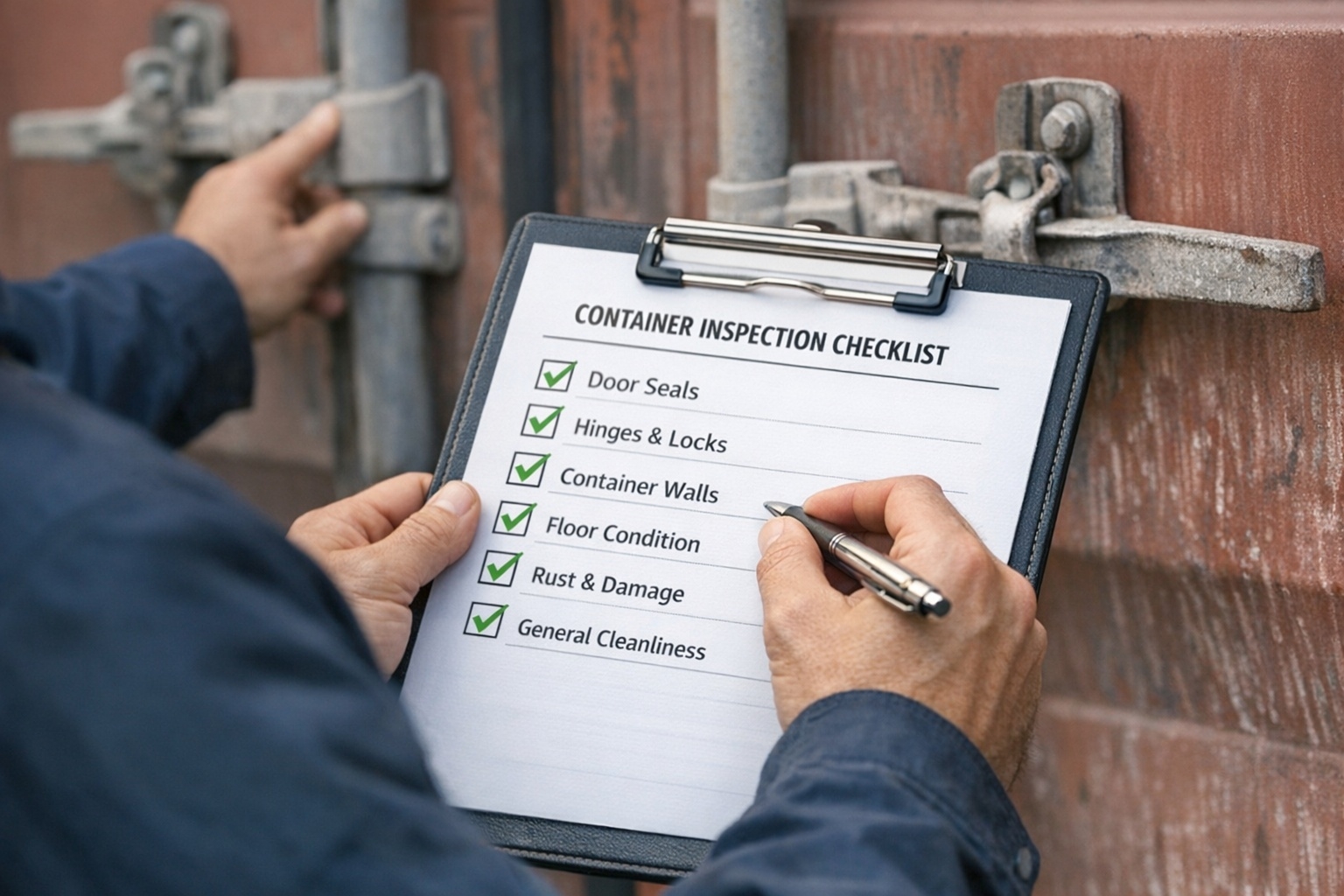
Buying a shipping container is a significant investment — prices range from $49 for accessories to $24,999+ for modified offices. Whether you're purchasing your first container or adding to a fleet, this 15-point inspection checklist ensures you get exactly what you pay for, from the right condition grade to proper delivery logistics.
Before You Purchase
1. Define Your Primary Use
Your intended use determines the container type, size, and condition grade you need. Storage-only projects can save with one-trip containers, while modification projects benefit from brand new units. Review our one-trip vs. brand new guide for detailed comparisons.
2. Choose the Right Size
Don't guess — measure. List your largest items, calculate total volume, and add 20% for access space. See our complete size guide for dimensions and capacity of every container type.
3. Verify the Supplier's Reputation
- Check Google reviews and BBB rating
- Verify they carry CSC-certified containers
- Confirm a physical business address (not just a website)
- Ask about their return/refund policy — reputable sellers offer guarantees
- Request references from recent customers in your area
4. Get a Delivery Quote First
Delivery can add $500-$3,000+ to your total cost depending on distance. Always get a delivery quote before committing to a purchase. Ask about tilt-bed vs. flatbed delivery and whether you need equipment on-site. See our shipping policy for full delivery details.
5. Check Local Permits
Contact your local zoning office before purchasing. Some areas require permits, enforce setback rules, or limit container placement duration. See our site preparation guide for details.
Structural Inspection (On Delivery)
6. Exterior Walls & Roof
Inspect all four walls and the roof for:
- Dents deeper than 1 inch (minor surface dents are normal on one-trip units)
- Holes, punctures, or light-visible gaps
- Excessive rust (surface oxidation is normal; through-rust is not)
- Paint condition matching the described grade
7. Floor Condition
Step inside and check the 28mm marine-grade plywood floor:
- No soft spots, warping, or delamination
- No signs of water damage or mold
- Plywood thickness is consistent (should be 28mm / ~1.1 inches)
8. Door Function
The most critical check. Both doors should:
- Open and close smoothly without excessive force
- Locking bars engage fully into cam keepers
- Handle mechanisms turn freely
- Hinges are lubricated and not seized
9. Door Gaskets (Rubber Seals)
Inspect the rubber gaskets around both door panels. They should be:
- Supple and flexible (not cracked, brittle, or hardened)
- Fully intact with no missing sections
- Creating a complete seal when doors are closed
Damaged gaskets can be replaced — contact our team for replacement gasket kits.
10. Water-Tight Test
The definitive test: close the doors, then check the interior with a flashlight. You should see zero daylight through walls, roof, or door seals. If delivery occurs during rain, inspect the interior for any water ingress.
Certification & Documentation
11. CSC Plate
Every shipping container should have a CSC (Convention for Safe Containers) plate welded near the left door. This certifies the container meets international safety standards for stacking and transport.
12. Container Number
Verify the container's BIC code (4-letter owner prefix + 6-digit serial + check digit) matches your purchase order. This is the container's unique identifier.
13. Condition Documentation
Photograph the container from all angles on delivery day — all four sides, roof (if visible), interior, floor, doors open and closed, CSC plate, and any damage. This protects you for warranty claims.
Post-Purchase
14. Secure It Immediately
Install a lock box and high-security puck lock on delivery day. Standard padlocks are vulnerable to bolt cutters — a lock box shields the padlock, and a puck lock resists picking. Contact our team for recommended security hardware.
15. Plan for Ventilation
Sealed containers can develop condensation ("container rain") from temperature fluctuations. Install a ventilation kit and place desiccant packs inside to prevent moisture buildup. Ask our team about ventilation solutions for your container.
Ready to Buy with Confidence?
Maritime Container Services guarantees every container is wind & watertight on delivery with a 30-day satisfaction guarantee. Browse our full inventory or contact our team — we inspect every unit before it ships.